
SONATA ⸱ Software-Defined Acoustic Levitation for Lab Automation
A new generation of laboratory tools is emerging that can manipulate liquids, powders, and fragile materials without containers or physical contact.


Rethinking Laboratory Handling and Automation
Modern laboratories still rely on pipettes, tubes, and microplates to move and process samples. These tools introduce contamination, sample loss, and variability, particularly for precious low-volume materials.
SONATA explores a different paradigm: containerless laboratory automation, where acoustic levitation allows droplets and particles to be positioned, merged, and analysed directly in mid-air using programmable sound fields.
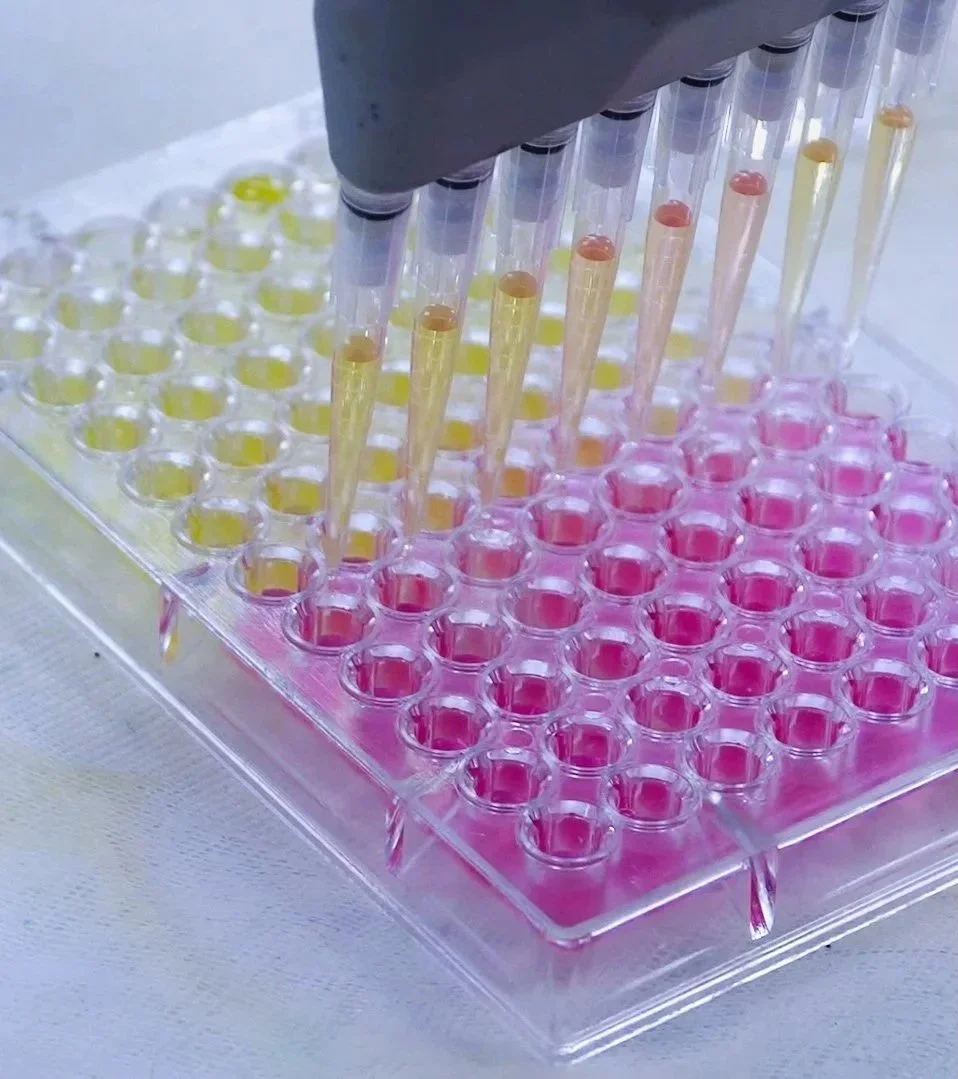
Container-bound Laboratory Workflows
Most laboratory automation systems remain fundamentally container-based. Liquids and samples are transferred through pipettes, wells, and microfluidic channels that introduce dead volume, adsorption losses, and contamination risks. In low-volume assays, particularly in proteomics or crystallography, even nanolitre losses or surface interactions can distort results, limit reproducibility, and constrain experimental design.
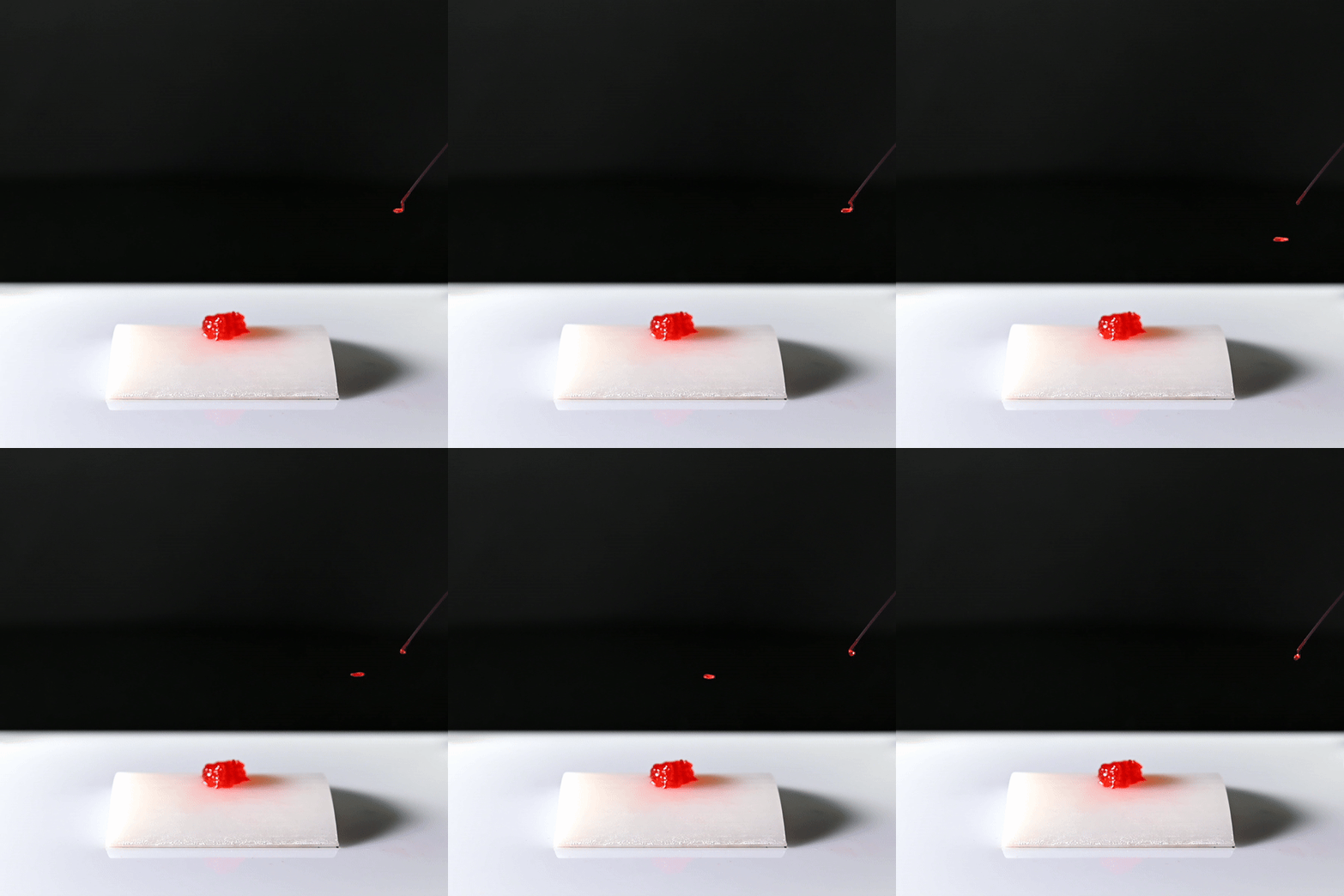
Software-defined, Contact-free Manipulation of Matter
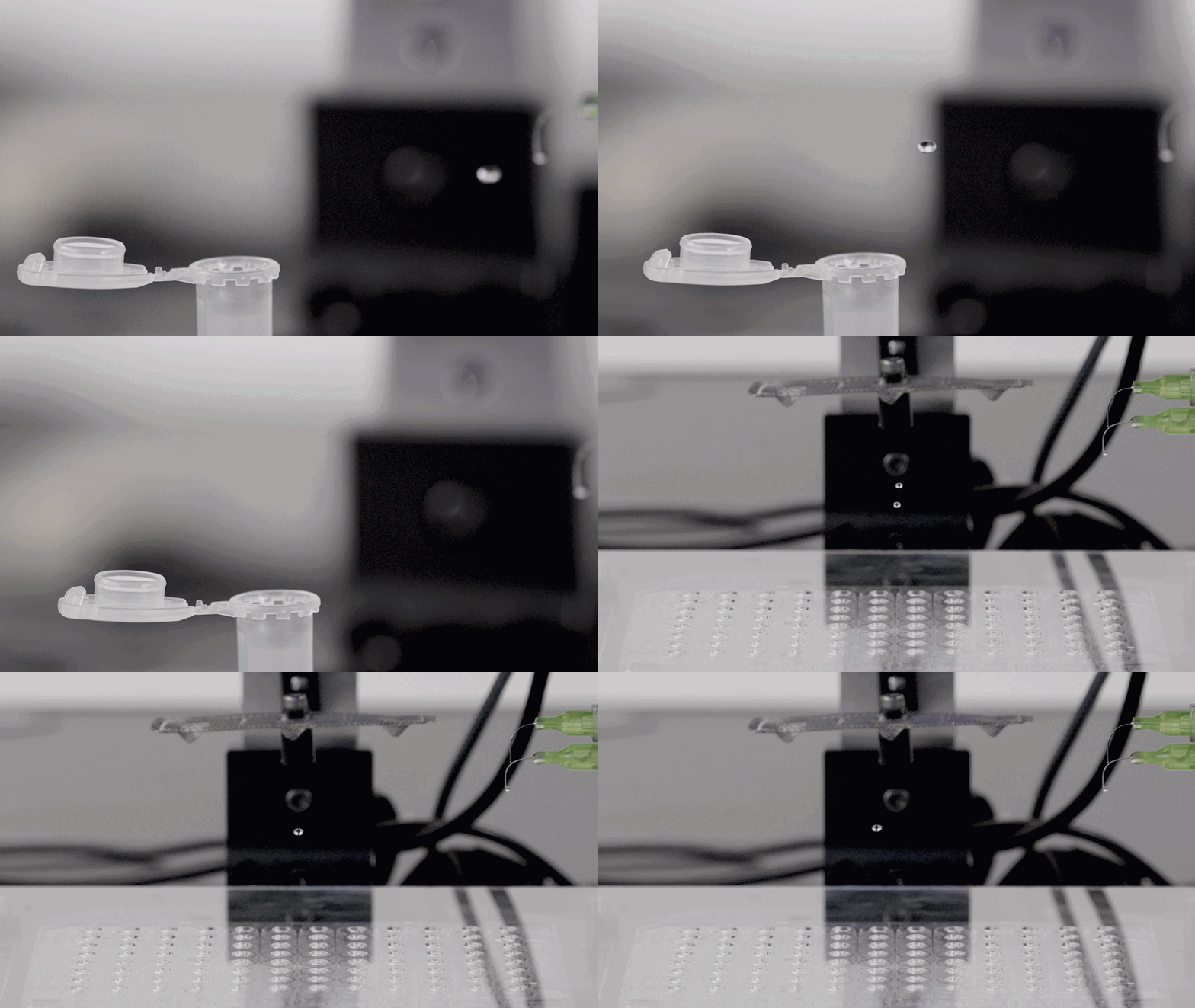
SONATA replaces container-based handling with programmable acoustic fields that trap and move droplets or particles directly in air. Using phased ultrasonic arrays and closed-loop control, the platform enables levitation, translation, merging, and analysis of samples without physical contact. This approach reduces contamination, preserves sample integrity, and enables new classes of automated experiments not possible with conventional tools.

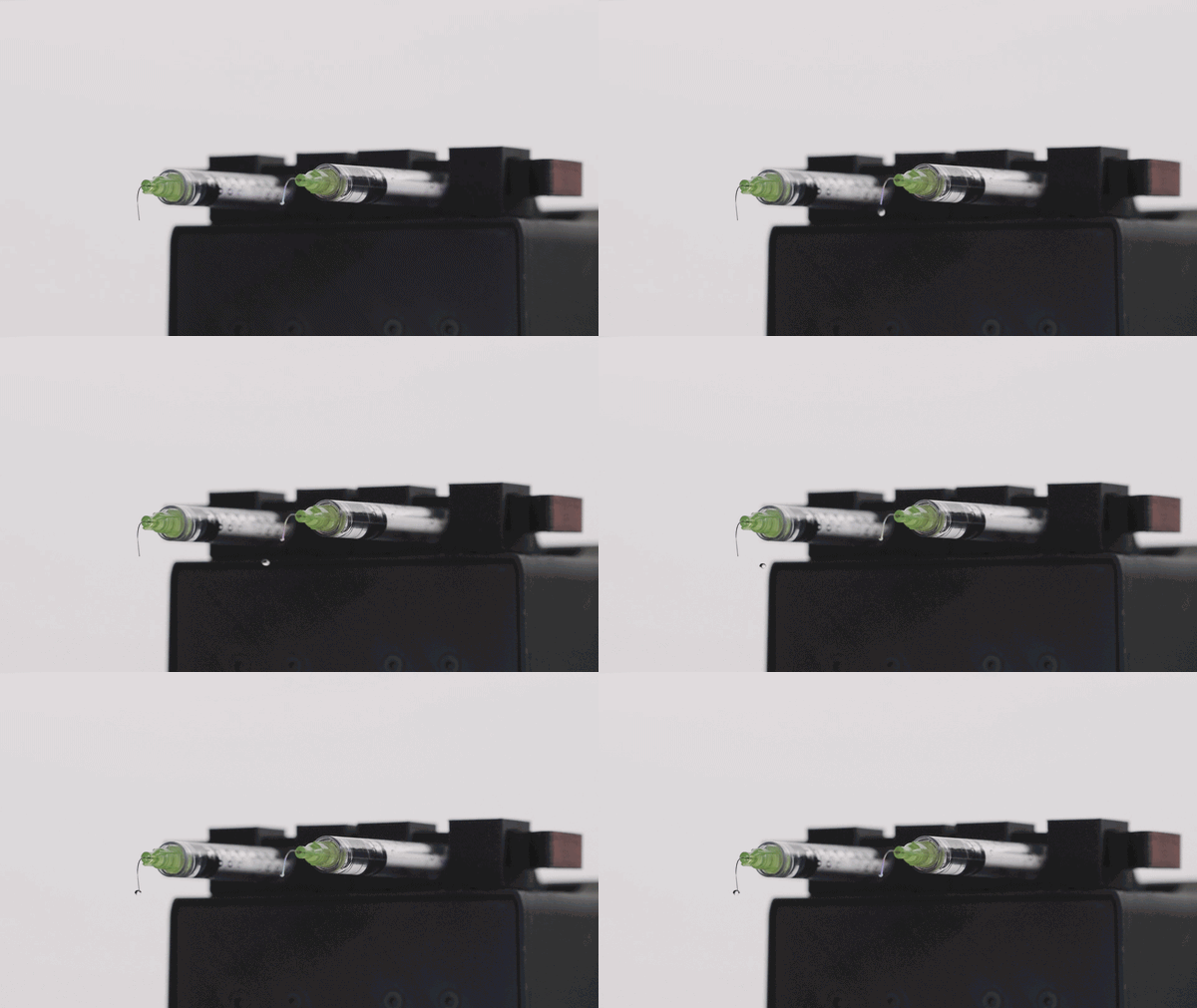
SONATA advances acoustic levitation from a laboratory curiosity into a reliable automation technology. The project develops the hardware, control systems, and workflow software required to manipulate droplets, powders, and fragile solids in mid-air with laboratory-grade reliability. Demonstrations in real experimental pilot settings will validate the platform for containerless workflows in proteomics, crystallography, and advanced materials research.
Project Objectives
Key Technical Objectives Include
-
![Diagram illustrating wireless data transmission with a central circle and arrows indicating data flow between paired wireless signals.]()
Closed-loop acoustic manipulation
Develop real-time feedback control combining ultrasonic phased arrays, sensing, and adaptive algorithms to stabilise and precisely position droplets and particles.
-
![Diagram showing a central dot with arrows pointing inward and outward, representing signal transmission or communication.]()
Reliable ingress and egress of samples
Create mechanisms for introducing liquids, solids, and powders into acoustic traps and depositing them into downstream analytical instruments.
-
![Line drawing of a computer monitor displaying flowchart symbols.]()
Programmable experiment orchestration
Build a software runtime and workflow tools that allow researchers to define automated sequences of levitation, mixing, merging, and deposition operations.
-
![Illustration showing nodes connected by curved lines, arranged in three rows, representing a network or data flow diagram.]()
Multi-sample and multi-step manipulation
Demonstrate stable handling of multiple droplets or particles simultaneously to support complex laboratory workflows.
-
![Line drawing of a chemical experiment with a conical flask containing a molecular structure inside.]()
Validation in real laboratory environments
Demonstrate containerless experimental workflows for proteomics, crystallisation, and related applications.

Technology Applications
SONATA explores how programmable acoustic levitation can integrate into real scientific workflows. By removing physical containers from key experimental steps, the platform enables new approaches to sample preparation, reaction control, and analytical measurement. The project will validate these capabilities through pilot studies and feasibility demonstrations with research partners.
Lab Automation
Laboratory automation systems typically rely on pipetting robots, microplates, and microfluidic channels that impose rigid workflows and introduce contamination risks. SONATA investigates containerless sample handling using acoustic levitation, enabling droplets or particles to be positioned, merged, and analysed directly in air. This approach could simplify automation architectures while reducing consumables, dead volume, and sample loss.
Proteomics
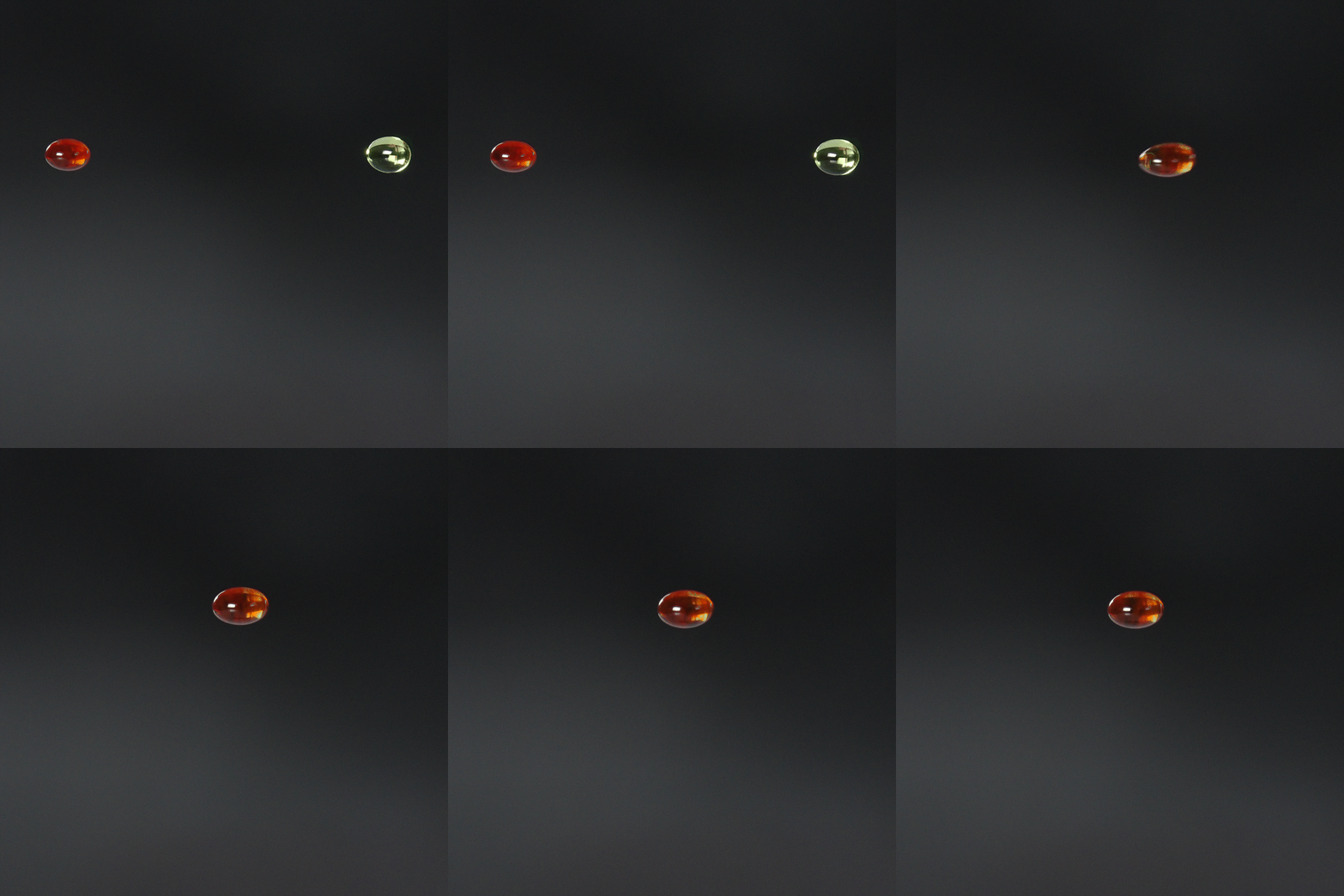
Proteomics experiments often involve extremely small sample volumes where adsorption to container surfaces and transfer losses degrade data quality. SONATA explores containerless handling of droplets and biological samples using acoustic levitation, enabling mid-air reactions and analysis. By eliminating surfaces, the platform aims to improve reproducibility and enable new experimental designs for single-cell and sub-cellular studies.
Crystallography and Advanced Materials
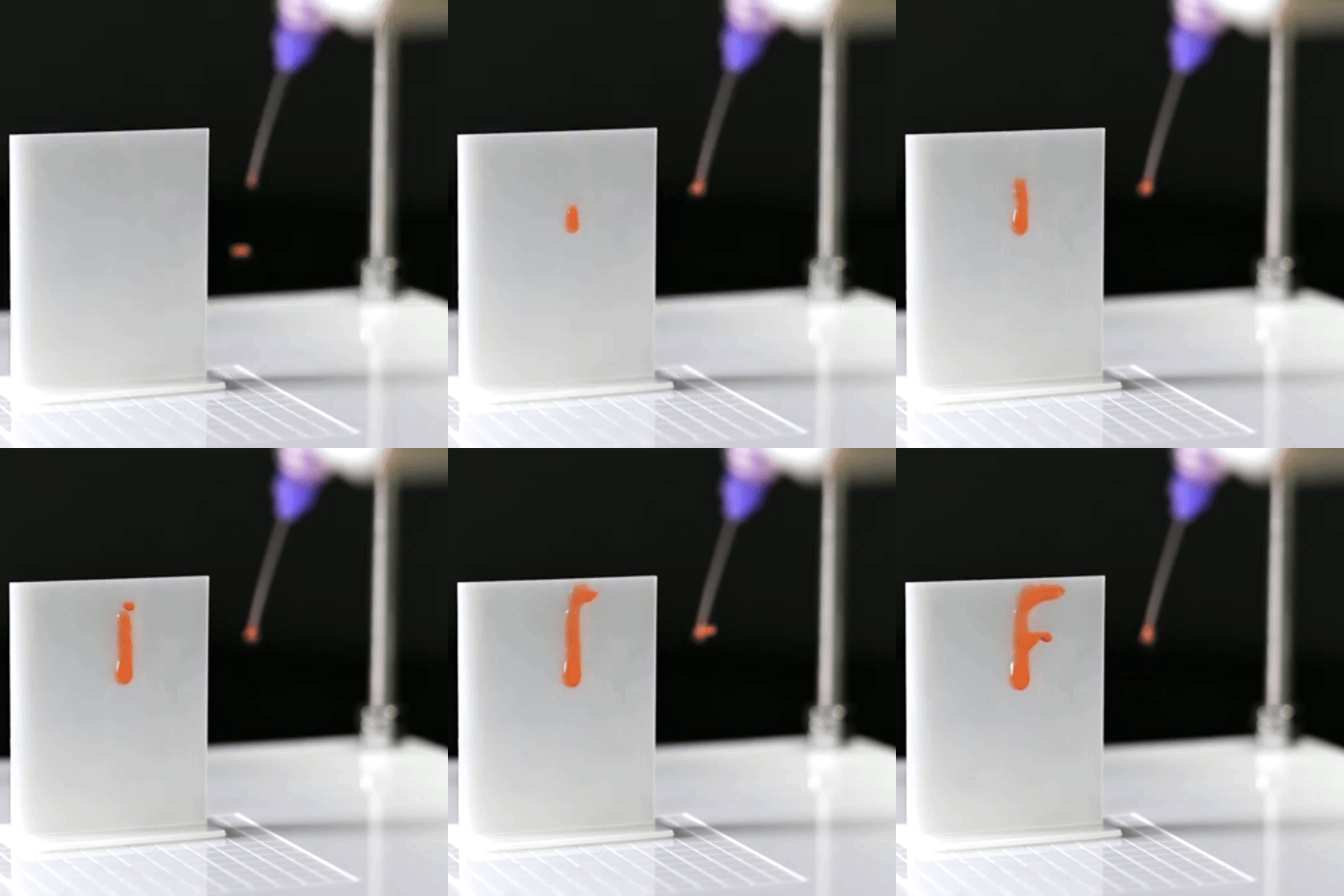
In crystallography and materials science, interactions with container walls can influence nucleation, crystal growth, and phase behaviour. SONATA investigates containerless processing of droplets and suspensions in acoustic traps, enabling controlled crystallisation and reaction studies without surface artefacts. This approach allows researchers to observe intrinsic material behaviour with improved precision and experimental repeatability.

Collaboration and Pilot Studies
SONATA includes pilot experiments and collaborative case studies with research groups interested in testing containerless workflows. If your laboratory or organisation is exploring new approaches to sample handling, reaction studies, or analytical measurement, we welcome opportunities to collaborate on feasibility studies and experimental validation.
To discuss pilot projects or research collaborations please get in touch.
About Sonata
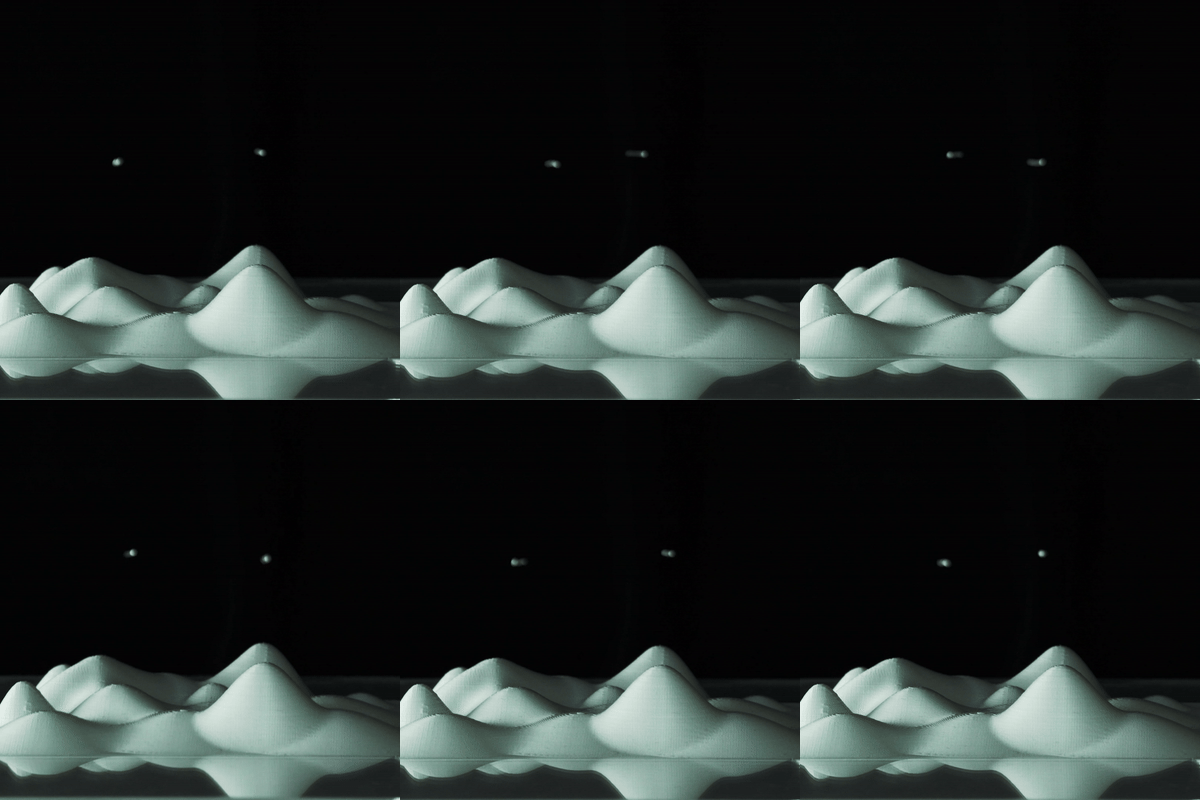
SONATA is an EU funded EIC-Transition project aiming to develop a programmable acoustic platform for handling matter in mid-air, enabling cleaner experiments, reduced sample loss, and entirely new laboratory workflows.
SONATA is led by AcoustoFab, a London-based deep-tech company developing programmable acoustic manipulation technologies. The company designs ultrasonic phased-array hardware and control software that enable levitation, transport, and precise handling of droplets and particles without physical contact. AcoustoFab’s platforms translate over a decade of academic research into practical systems for laboratory automation, materials research, and industrial processing.

Explore Collaboration Opportunities
Interested in containerless laboratory workflows, acoustic levitation, or experimental automation? Get in touch to discuss pilot studies, research collaborations, or potential applications of the SONATA platform.